The Honors Program is for students with a deep interest in how politics affects our world, and how economics, culture, and other factors affect politics. Admission to the Honors Program is competitive. The best candidates have outstanding academic records, a capacity for critical thought and clear articulation of ideas, and enthusiasm for study and independent research in the field of politics.
Image

The Program enables students to develop their interests in a series of small seminars, restricted to the six or seven students who make up a typical Honors class. One seminar is held in each of the four sub-fields of politics: Political Theory, International Relations, Comparative Politics, and American Politics. Honors students also explore their interests by working closely with a faculty member in writing an original Honors thesis on a topic of their choosing. The Honors program encourages creative analytical approaches and thesis projects often reflect Honors students’ interests in combining politics with other fields. The Program challenges students to achieve the highest standards of intellectual rigor, and provides them with flexibility to develop innovative approaches to understanding the most important political issues of our time.
Graduates of the program have received advanced degrees from prestigious universities, clerked for Supreme Court Justices, become Rhodes Scholars, edited law reviews, advised small businesses, served as military officers, developed social entrepreneurship opportunities, and taught at top colleges and universities.
For questions, please contact the Director of the Honors Program, Professor Jennifer Lawless.
Expand content
Expand content
2026-2027 Calendar
September 24, 2026 | 6:30 PM | Welcome reception
April 23, 2027 | 12 PM (no exceptions) | Final theses due (4th years)
May 6 & 7, 2027 | 9 AM - 4 PM, Gibson Hall 296 | Written exams (3rd and 4th years)
May 13, 2027 | 9 AM - 4 PM, Gibson Hall 296 | Oral exams (3rd and 4th years)
May 21, 2027 | 6 PM - 8 PM, Doyle Hotel | Commencement dinner and awards ceremony
May 22, 2027 | Commencement on the Lawn | University and Department ceremonies
Expand content
Application Process and Calendar
Students apply to the program during the second semester of their second year. It is not necessary to have already declared a Government or Foreign Affairs major.
Candidates should have completed at least two courses in the Department of Politics by the time they apply. In rare cases, we will consider candidates with fewer Politics courses if they can otherwise demonstrate their commitment to the study of politics. Although there is no GPA requirement, successful applicants typically have at least a 3.7 GPA.
At an informational meeting at the end of the fall semester, the Director and current Honors students discuss the program and answer prospective applicants’ questions.
An application portal opens in January for students to submit materials (cover sheet, resume, transcript, graded writing sample, and two short essays) and letters of recommendation. After reviewing all applications, a panel of Honors faculty interviews a limited number of applicants.
For questions about the admission process, please contact the Program Director, Professor Jennifer Lawless.
2026 Application Calendar
December 2, 2026 | 7 PM, Gibson Hall 296 | Information session for Class of 2029
January 29, 2027 | 12 PM | Class of 2029 Honors applications due
February 5, 2027 | Honors finalists announced
February 12, 2027 | 9 AM - 4 PM, Gibson Hall 296 | Honors finalist interviews
February 15, 2027 | Honors Class of 2029 decisions
Expand content
Academic Components of the Honors Program
Honors Seminars
Starting in the Fall semester of the third year, Honors students take four intensive seminars, one in each of the subfields of political science: American Politics, Comparative Politics, International Relations, and Political Theory. The four seminars form the core of the Honors program. In addition, students take a research design workshop during their first semester in the program to prepare them to conduct original research and write a thesis.
The seminars, all of which are Pass/Fail, include challenging readings, regular written assignments, and intensive interaction with faculty members and fellow students. The goal of the seminars is to develop students’ verbal and written critical thinking skills. Faculty provide students with regular constructive evaluations of their work and also submit to the Program Director a detailed written evaluation of each student’s performance at the end of each seminar. Each substantive seminar counts for nine credit hours, and the Research Design class counts for three.
Outside Courses
Honors students broaden their backgrounds and consider diverse analytical approaches and issues by taking a minimum of six courses (18 credits) outside the program. Many take more. Students may choose to take these courses on a pass/fail basis. In taking these classes, some students manage to complete a second major or a minor in another discipline. The Program works closely with students to enable them to use these courses to serve their intellectual needs.
Honors Thesis
Honors students research and write an original thesis on the topic of their choice, selected in consultation with the program’s Director and prospective thesis advisor. Limited funding is available to all Honors students to support their thesis research. Please see the Funding page for more information about how to apply for available funds.
To accommodate their thesis research, 4th year Honors students may register each semester for PLAD 4999, a three-credit “Senior Thesis” course.
Final Examinations
Students take written and oral examinations at the end of their third and fourth years. These exams cover each of the four subfields and are based on the two substantive classes the students took each year.
Each written exam consists of several essay questions addressing key issues covered by an Honors seminar. Students have three hours to complete each written exam, one on each of two consecutive weekdays. The University Honor Code applies to these exams as it does to all University assignments.
Following their written exams, students take oral exams with the panel of examiners and the Program Director. Examiners are free to pose questions about broader issues in the subfield as well as material covered by the written exams. These oral exams are approximately 30 minutes per student each year.
Levels of Honors
The Program Director and Honors faculty members review each student’s overall two-year record in the Program to determine the level of Honors students receive on their transcripts and diplomas. Students can graduate with Highest Honors, High Honors, Honors, or No Honors. “No Honors” is the equivalent of graduating as a regular major.
Expand content
Frequently Asked Questions
In addition to the four core seminars and the thesis writing workshop, how many courses outside the Honors Program can I take in my third and fourth years?
- You must take at least six other courses. You can apply them toward a second major or a minor. Many Honors students take many more than six courses. Of course, in addition to the courses you take in the Honors Program years, you must complete standard College requirements for graduation.
Does my GPA “freeze” when I enter the Politics Honors Program?
- Honors students have the choice of taking classes on a pass/fail basis or for a grade, so long as the faculty member teaching any given course agrees. If you take all your classes on a pass/fail basis, then your GPA is frozen at the level it was at the time you entered the Program. Courses you take for a grade will be included in your final GPA.
Can I double-major or minor in another Department?
- Yes. Many students in the program have double majors or minors in another department.
Can I study abroad or take a semester at another university and still participate in the Program?
- To complete the Honors seminars, you must be here for the Fall and Spring semesters of your third and fourth years. Accordingly, many Honors students study abroad during summers.
Can I write my thesis on a topic that is not covered in the core seminars?
- Absolutely. You are free to work on whatever topic you wish as long as the Program Director approves it.
Where can I find the official academic requirements for the University?
- The information contained on this website is for informational purposes only. The Undergraduate Record and Graduate Record represent the official repository for academic program requirements: https://records.ureg.virginia.edu/.
Expand content
Stevenson Prize Winners
2026 | Maria (Maya) Wrona
2025 | Zach Lederer
2024 | Ethan Marsh
2023 | Cameron Chavers
2022 | Jenny Glazier
2021 | Kevin Baker
2020 | Eileen Ying
2019 | Ankita Satpathy
2018 | Ashley Mehra
2017 | John Brake
2015 | Adria Penatzer
2014 | Caroline Casavant
2013 | Edward Smith
The information contained on this website is for informational purposes only. The Undergraduate Record and Graduate Record represent the official repository for academic program requirements. These publications may be found at https://records.ureg.virginia.edu/.
Departmental Faculty
-

Gerard Alexander
Associate ProfessorView Profile -

Colin Bird
ProfessorView Profile -
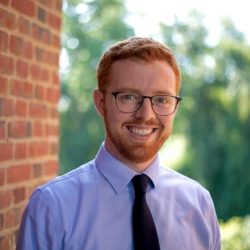
Christopher Carter
John L. Nau III Associate Professor of the History and Principles of DemocracyView Profile -

Jennifer Lawless
Leone Reaves and George W. Spicer Professor of PoliticsView Profile -

John M. Owen, IV
Ambassador Henry J. and Mrs. Marion R. Taylor Professor of PoliticsView Profile -

Todd Sechser
ProfessorView Profile